ACS EuroPath Survey

The 2024 ACS EuroPath survey showed earlier lipid assessment, increased combination therapy use, and improved LDL-C goal achievement in European ACS patients over time.¹
However, suboptimal LDL-C goal attainment persists, emphasising the need for sustained efforts to help improve outcomes for ACS patients.¹
The 2024 survey showed that training cardiologists on ESC/EAS dyslipidaemia guidelines helped to improve outcomes for patients, with patients of trained cardiologists demonstrating better LDL-C goal achievement at follow-up than patients treated by untrained cardiologists.¹
ACS Europath Webisode 2025
Study details

The survey evaluated cardiologists’ lipid management of ACS patients in the acute and follow-up phases, comparing with data from the ACS EuroPath I (2018)* and ACS EuroPath IV (2022) surveys (both N=2,650)†

530 cardiologists from six European countries‡ provided data on 2,650 ACS patients treated between July–October 2024¹

A subgroup of cardiologists received training on ESC/EAS dyslipidaemia guideline implementation (N=210 patients from 30 cardiologists) and their performance was compared with the main sample (N=2,650 patients from 530 cardiologists)†*
Patient characteristics1
| 2024 | 2022 | 2018 | P value (2024–2022) |
|
|---|---|---|---|---|
| Patients, n | 2,650 | 2,650 | 2,650 | |
| Acute patients, n (%) | 863 (33%) | 929 (35%) | 900 (34%) | 0.06 |
| Follow-up patients, n (%) | 1,787 (67%) | 1,721 (65%) | 1,750 (66%) | 0.06 |
| Age (years), mean (±SD) | 64.7 (12.7) | 64.5 (12.2) | 65.4 (12.5) | 0.66 |
| Gender: Women/Men, n (%) | 953 (36%) / 1,697 (64%) | 872 (33%) / 1,778 (67%) | 894 (34%) / 1,756 (66%) | 0.02 |
| Smokers, n (%) | 1,997 (75%) | 1,949 (74%) | 1,897 (72%) | 0.13 |
| – Current smokers, n (%) | 926 (35%) | 899 (34%) | 1,022 (39%) | 0.44 |
| – Former smokers, n (%) | 1,071 (40%) | 1,050 (40%) | 875 (33%) | 0.56 |
| Comorbidities, n (%) | ||||
| Obesity, n (%) | 895 (34%) | 857 (32%) | 752 (28%) | 0.27 |
| Diabetes, n (%) | 1,043 (39%) | 1,032 (39%) | 951 (36%) | 0.76 |
| Hypertension, n (%) | 1,898 (72%) | 1,912 (72%) | 1,989 (72%) | 0.67 |
| Familial hypercholesterolaemia, n (%) | 265 (10%) | 213 (8%) | 198 (7%) | 0.01 |
| Previous CV event, n (%) | 373 (14%) | 348 (13%) | 284 (11%) | 0.32 |
| Stable CAD, n (%) | 352 (13%) | 359 (14%) | 382 (14%) | 0.78 |
| Polyvascular disease, n (%) | 250 (9%) | 256 (10%) | 214 (8%) | 0.78 |
| Family history of premature CV disease, n (%) | 943 (36%) | 885 (33%) | 778 (29%) | 0.09 |
Results: Improved lipid management from
2018 to 2024
Improvements compared to previous years were observed in the:
- Assessment of lipids
- Use of treatment strategies with at least two LLTs
- Achievement of current ESC/EAS-recommended LDL-C goal 1.4 mmol/L (<55 mg/dL) for VHR patients
Despite this progress, patient LDL-C levels remain suboptimal1
LIPID TESTING
ACUTE PHASE
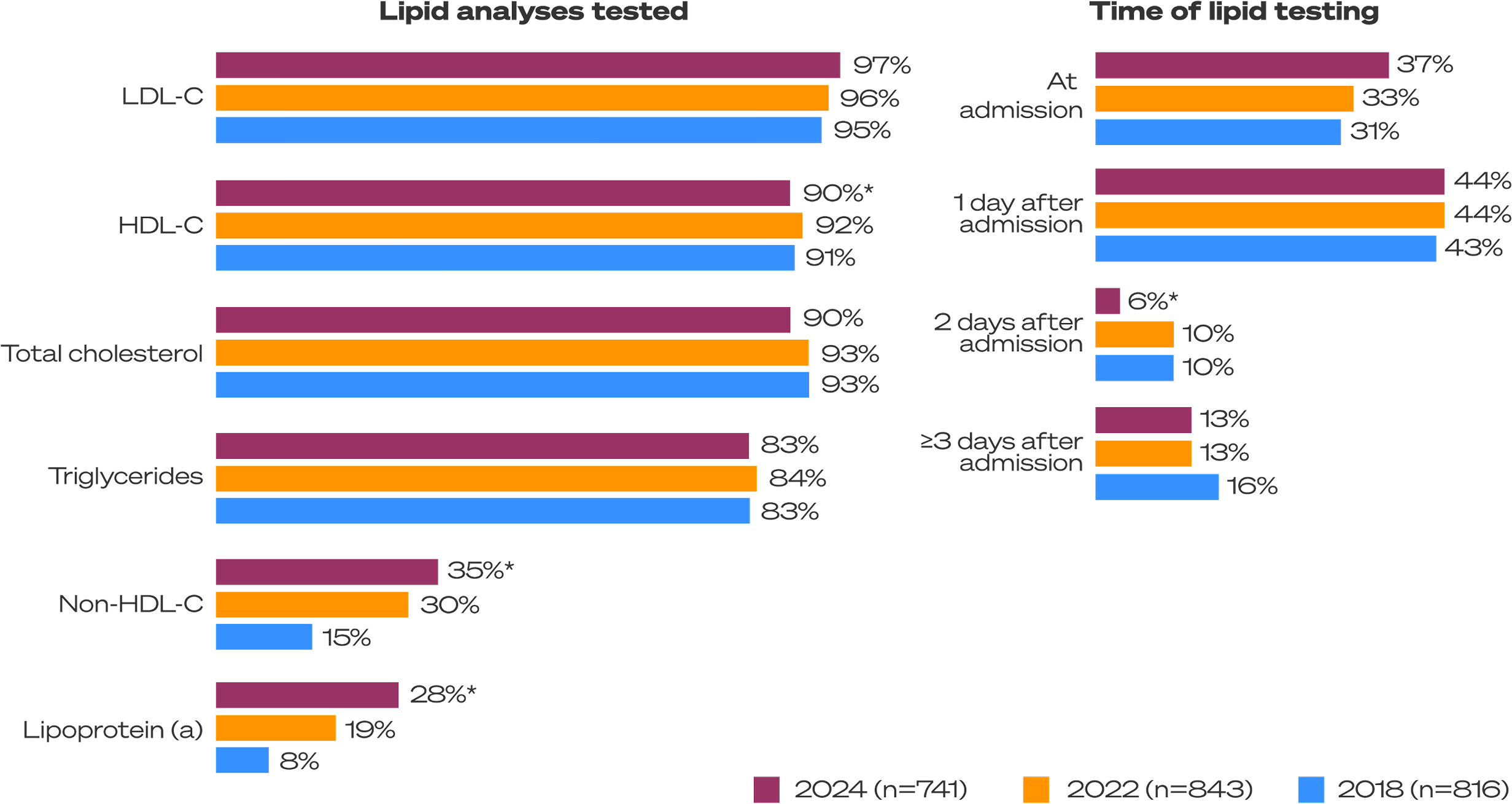
- The average time for lipid testing decreased from 1.7 days in 2018 to 1.3 days in 20241
- For any lipid analysis, the proportion of patients tested for lipid levels decreased slightly in 2024 (86%) compared to 2022 (90%) and 2018 (90%)1
- The proportion of patients tested for LDL-C levels remained consistently high across all years1
Adapted from Laufs U, et al. 20251
*Indicates significant differences between years.
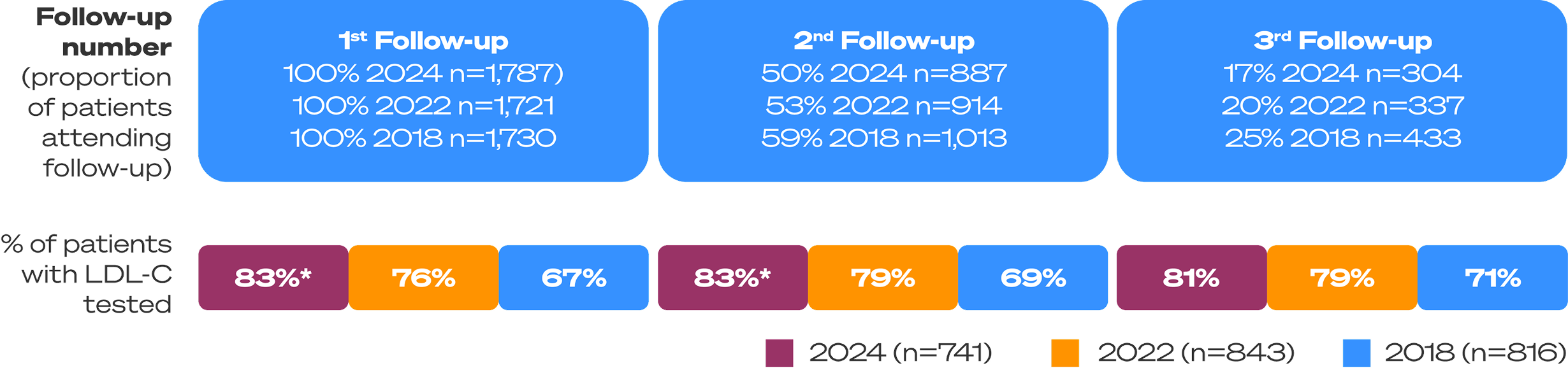
FOLLOW-UP
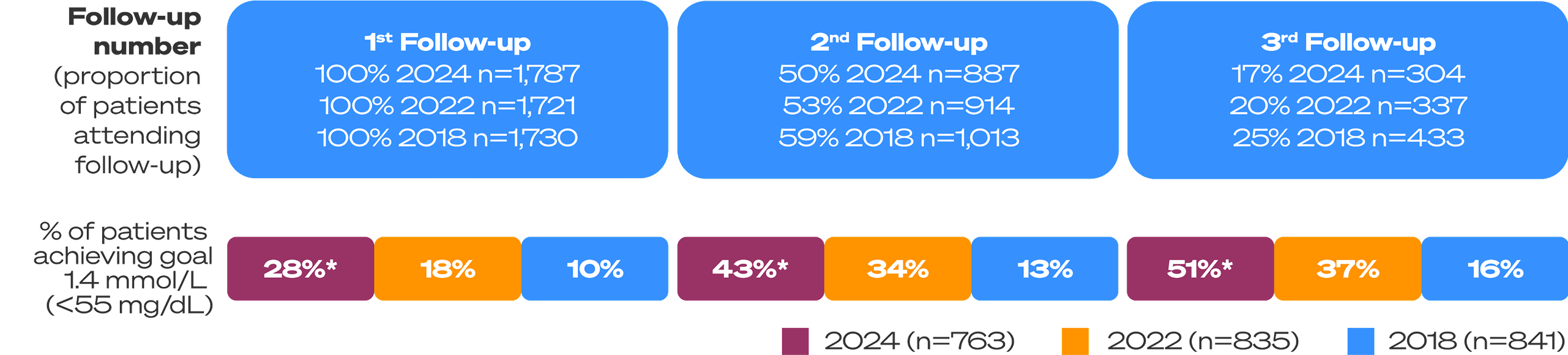
- In 2024, significantly more patients were tested for LDL-C levels at first and second follow-up vs. 2022 and 20181
Adapted from Laufs U, et al. 20251
*Indicates significant differences between years.
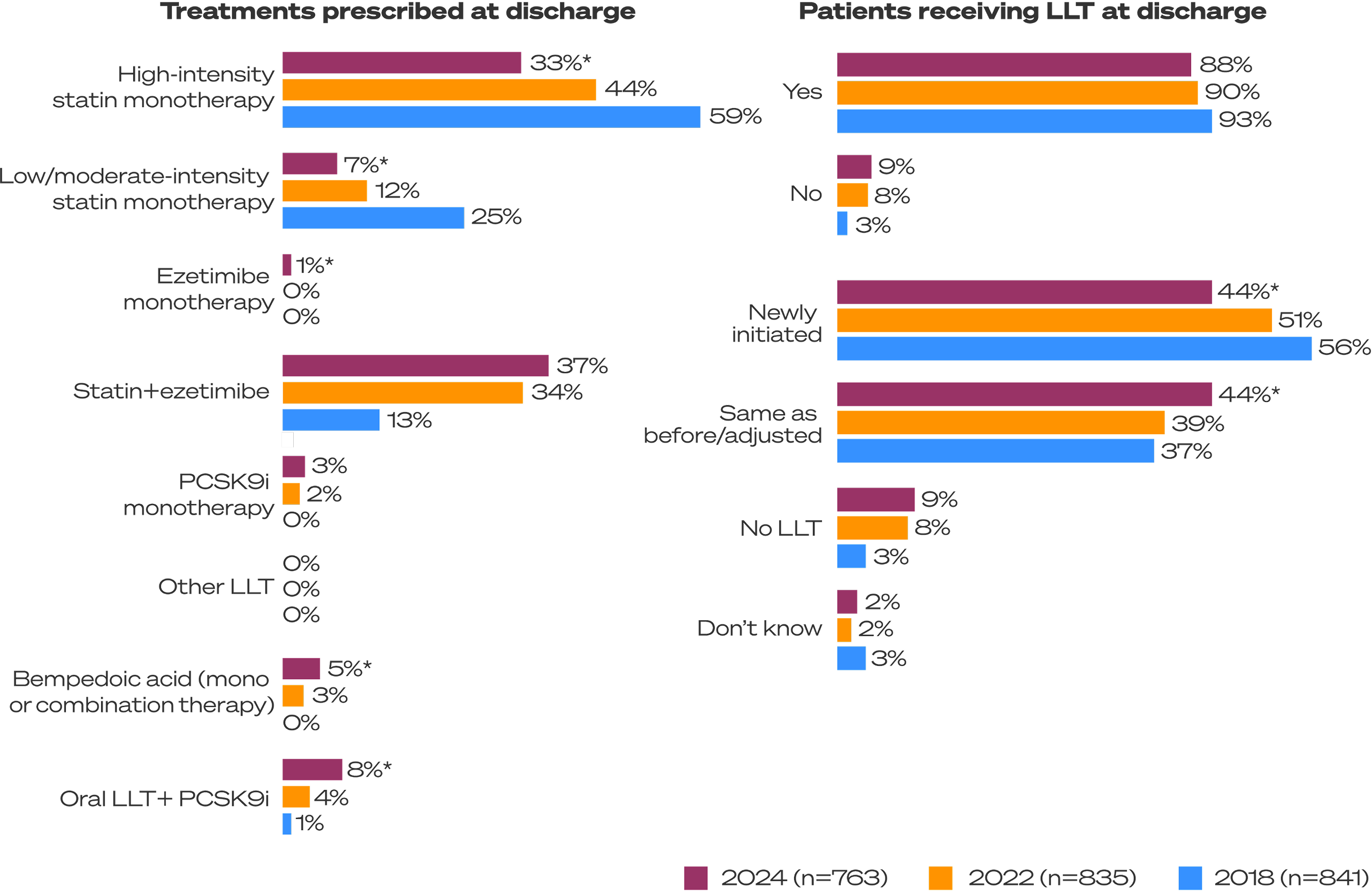
TREATMENT PRESCRIPTION
-
At discharge, the use of high- and low/moderate-intensity statin monotherapy
decreased markedly over time, whereas the
prescription of combination therapies
(statin + ezetimibe, bempedoic acid [mono or combo], PCSK9i + oral LLT)
increased1
- The increased prescription of statin + ezetimibe was not significant
- The proportion of patients receiving any form of LLT at discharge decreased (non-significant)1
The 2025 Focused Update of the ESC/EAS dyslipidaemia guidelines recommends intensification of LLT during the index ACS hospitalisation for patients who were on any LLT before admission in order to further lower LDL-C levels2
Find out more hereProportion of patients receiving LLT, in total and per therapy type1

LDL-C GOAL ACHIEVEMENT
- The proportion of VHR patients achieving the ESC/EAS-recommended LDL-C goal of 1.4 mmol/L (<55 mg/dL) remains suboptimal1
- However, LDL-C goal attainment improved over time, with 28% of patients achieving LDL-C goal at first follow-up in 2024, vs. 18% and 10% in 2022 and 2018, respectively1
Adapted from Laufs U, et al. 20251
*Indicates significant differences between years.
Did you know that the 2025 Focused Update of the ESC/EAS dyslipidaemia guidelines introduced an ‘extreme’ CV risk category with a lower LDL-C goal of 1.0 mmol/L (<40 mg/dL)?1
Patients who were discharged or prescribed oral LLT in combination with a PCSK9i at the first or second follow-up had higher LDL-C goal attainment in later follow-ups than those not prescribed combination therapy.1

DISCHARGE AND FOLLOW-UP PLANNING
- The proportion of patients with planned follow-up visits at discharge decreased from 80% in both 2018 and 2022 to 76% in 20241
- Rehabilitation programme planning at discharge was comparable in 2022 and 20241
- Fewer patients received lipid management discharge letters (61% in 2024 vs. 66% in 2022)1
Results: Enhanced dyslipidaemia guidelines
adherence in trained sample vs. main sample

LIPID TESTING
- Patients in the trained group were more likely to undergo lipid testing than patients in the main sample (96% [N=210] vs. 86% [N=2,650] in the main sample)1
TREATMENT PRESCRIPTION
- At discharge, patients in the trained group were more likely to receive LLT (96% [N=210] vs. 88% [N=2,650] in the main sample), with more combination therapies prescribed1
PLANS AT DISCHARGE
- The proportion of patients with follow-up visits planned at discharge or who received a discharge letter was significantly higher in the trained group than in the main sample1
LDL-C GOAL ACHIEVEMENT
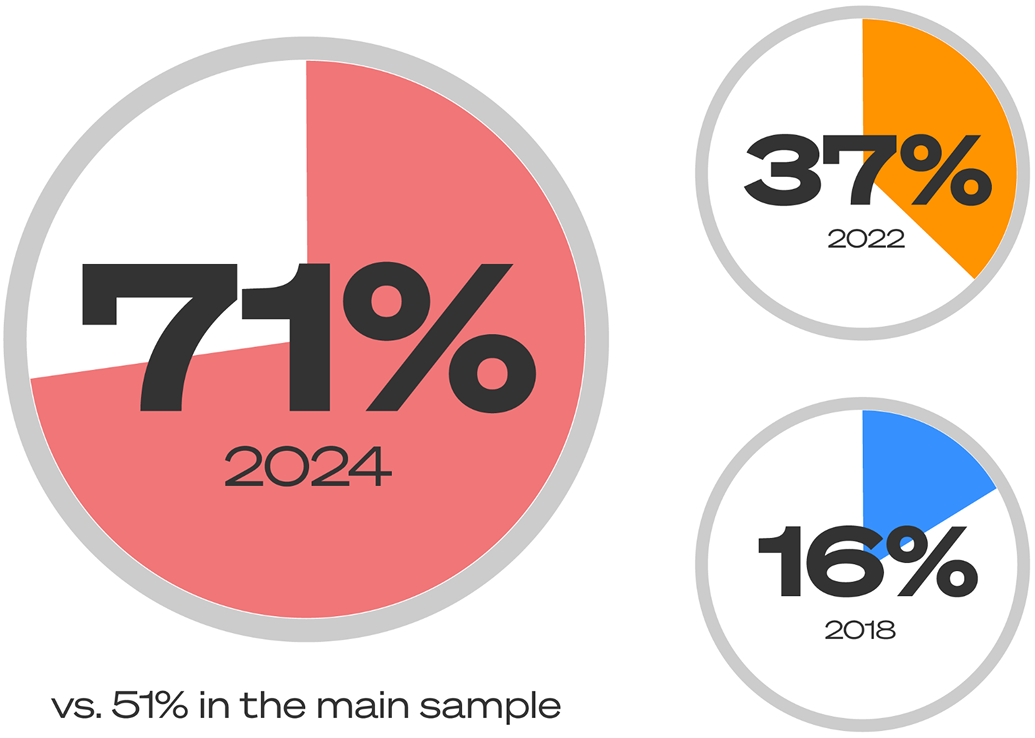
- The proportion of patients achieving LDL-C goal was greater in the trained group of cardiologists vs. the main sample1
% of patients achieving ESC/EAS-recommended LDL-C goal
1.4 mmol/L (<55 mg/dL)1
Third follow-up
(2024 trained group n=210;
main sample n=304)
(2022 n=433)
(2018 (n=337)
Summary

The surveys show that lipid management of ACS patients has continuously improved from 2018 to 20241

Training enhanced dyslipidaemia guideline adherence, leading to increased lipid testing, LLT prescription, LDL-C goal achievement and patient follow-up1

With LDL-C goal attainment remaining sub-optimal, there is opportunity to further optimise guideline implementation and improve outcomes for post-ACS patients1
*The year prior to the publication of the 2019 ESC/EAS Guidelines for the management of dyslipidaemias.¹
†The surveys used identical methodology and questionnaires. However, the screening criteria for the participating physicians in 2024 differed slightly from those for 2022 (no restriction on years in practice or percentage of time spent in direct patient care) and the threshold for the number of ACS patients treated per month was slightly higher (>20 ACS patients per month vs. >15 in 2022 and >20 in 2018).
‡France, Germany, Italy, Spain, UK, and the Netherlands.
¥The trained sample was a group of cardiologists (n=30; 47% interventional cardiologists; 53% general cardiologists from 12 countries (the six participating in the main sample plus one cardiologist from each of the following countries: Austria, Czech Republic, Israel, Kuwait, Poland and Saudi Arabia)) who participated in a two-day scientific education and exchange meeting focused on treatment and secondary prevention post-ACS.¹
ACS = acute coronary syndrome; CAD = coronary artery disease; CV = cardiovascular; EAS = European Atherosclerosis Society; ESC = European Society of Cardiology; HDL-C = high-density lipoprotein cholesterol; LDL-C = low-density lipoprotein cholesterol; LLT = lipid-lowering therapy; PCSK9i = proprotein subtilisin/kexin type 9 inhibitor; SD = standard deviation.
- Laufs U, Katasznik R, Schiele F, et al. The ACS EuroPath survey series: time trends in lipid management after an acute coronary syndrome. Eur J Prev Cardiol. 2025.
- Mach F, Koskinas KC, Roeters van Lennep JE, et al. 2025 Focused Update of the 2019 ESC/EAS Guidelines for the management of dyslipidaemias. Eur Heart J. 2025;ehaf190.